
The Implementer's Essentials
Dec 04, 20255.5 Minute Read
In the last newsletter, we explored the three Critical Success Factors to keep TOC alive and thriving long after implementation. They were:
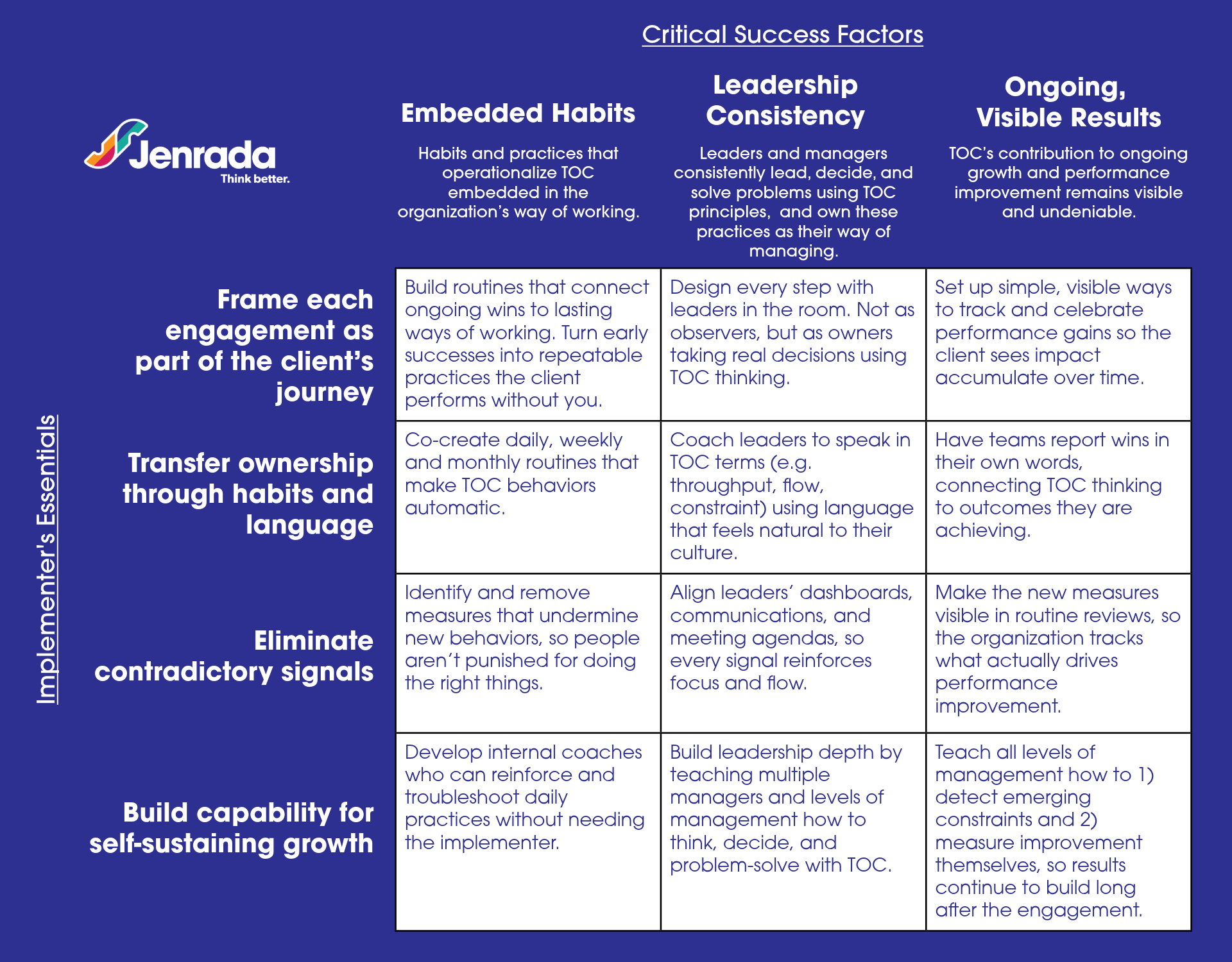
- Embedded Habits. Habits and practices that operationalize TOC must be embedded in the organization’s way of working.
- Leadership Consistency. Leaders and managers consistently leading, deciding, and solving problems using TOC principles — and owning these practices as their way of managing.
- Ongoing, Visible Results. TOC’s contribution to ongoing growth and performance improvement must remain visible and undeniable.
This week I want to address a common assumption I find amongst even the most seasoned of TOC practitioners: that sustaining an implementation is something we work on after the implementation phase and its quick wins have been achieved.
Some implementers might consider a “successful engagement” to be one where the client has achieved their intended results by the conclusion of the implementation. After that, the thinking goes, the client’s ability to sustain those results is on them.
While I get where this thinking comes from (“how much control do I really have over a client’s conviction to succeed!?”), I'd argue that this implicitly tells the wrong story to the organization. Every implementation engagement, and the success factors of that engagement, should be framed by both the big, credible results TOC is known for and the long-term TOC success of that organization.
Sustainment doesn’t begin after implementation. For a change to be sustainable, we must design, lead, and guide it from the start.
Sustaining From The Start
That’s the purpose of the Implementers’ Essentials — four guiding principles that shape every engagement to deliver not just results, but the sort of resilience that takes quick wins and makes them permanent. They are the bridge between doing the work and ensuring the work endures.
1. Frame each engagement as part of the client’s1 journey.
Every engagement should deliver big, credible results while simultaneously strengthening the foundation for long-term success. TOC isn’t a project that ends when the consultant or champion leaves, it’s a way of managing and improving that must belong to the client. If it doesn’t build both results and capability, it won’t sustain.
Without those anchors, even the best results will eventually drift. With them, the organization gains the stability and confidence to keep moving forward.
2. Transfer ownership through habits and language.
Sustainability happens when people act and talk as if TOC was always theirs. Replace consultant-speak with language that fits the culture. Build daily routines that make TOC simply "the way we do things here."
2. Eliminate contradictory signals.
Old cost-world measures and mixed messages will always pull the organization back. Leaders’ words, measures, and behaviors must align, and competing signals need to be recognized and stopped in their tracks.
4. Build capability for self-sustaining growth
The true test of implementation isn’t what happens during the engagement — it’s what continues after. Develop internal leaders, coaches, and mechanisms that keep TOC evolving on its own. If growth depends on you — or any single individual — it won’t sustain.
Connecting Implementation to Sustainment
Each of the four Implementers’ Essentials strengthens all three Critical Success Factors — creating a self-reinforcing system that builds habits, leadership consistency, and visible ongoing results.
When Results Meet Resilience
These four Essentials remind us that the measure of success isn’t just what changes while we’re there, it’s what keeps improving after we’re gone.
When we connect how we implement to how organizations sustain, we leave behind not just results, but resilience.
I’ll leave you with two questions I’ve been asking myself, and I invite you to ask them too:
- Where is the biggest opportunity for you to shift your own implementation approach for stronger sustainment?
- And if your experience suggests an Essential we haven’t named yet, what is it, and why does it make a difference?
Till next time,
Lisa
1: When I say ”consultant”, I'm referring to the people guiding the implementation. When I say “client”, I'm referring to the people and organization that will continue to operate in the changed environment after the implementation project is completed.
Whenever you're ready, here are a couple more ways I can help you:
- Assumption Hacking Essentials. If you’d like to strengthen the human side of your TOC practice, sign your team up for Jenrada’s course Assumption Hacking Essentials. It’s specifically designed to highlight how individual and group assumptions drive (or block) sustainable results, offering tools and strategies to ensure your improvements truly stick. You can learn more about the course here. →
- Jenrada Programs. Customized workshops and longer engagements to help you create an organization of aligned problem solvers delivering extraordinary results. Complete this form, send me an email, or schedule a discovery call.
Your Weekly AHA!
Every week, receive one actionable tip from JonahLisa to help you create breakthrough in your business and life.
We hate SPAM. We will never sell your information, for any reason.