
What Makes It Stick?
Nov 04, 20257 Minute Read
The room was buzzing. There were 30+ of us and we were eager to learn, to challenge, to get honest about the engagements so many of us had led or lived through. Our focus was on a familiar pattern: those engagements that started strong, delivered results, and then began to slip once implementation was over.
We were there for a workshop I was hosting called Sustaining the Change (as part of TOCICO 2025) and the central question was this: how to make the changes we implement last?
This isn’t an academic question. It’s a practical, real life, full-of-consequences kind of question. Because we’ve all seen it play out: a change initiative that starts with great momentum, delivers undeniable results… and then slowly loses its spark. Not because the tools stop working or people stop caring, but because the reality is that sustaining a change requires different muscles than starting it.
Three Critical Success Factors
Our first order of business was to evolve a goal tree, a shared picture of what long-term success looks like. Three Critical Success Factors came into focus, each one representing something the implementing organization must have in place if the change is to become part of its DNA, and not just its history.
1. Embedded Habits
A change doesn’t sustain by decree. It sustains through habit.
When new routines, rituals, and ways of thinking become the default — the way people plan, decide, and review performance — the change no longer feels like “the initiative.” It just feels like “how we do things around here”.
Embedding habits means deliberately designing where and how TOC principles show up every day — in how the flow of work is managed, leadership meetings are conducted, performance conversations occur, problems are solved and success is recognized. These are the daily reinforcements that turn a concept into a culture.
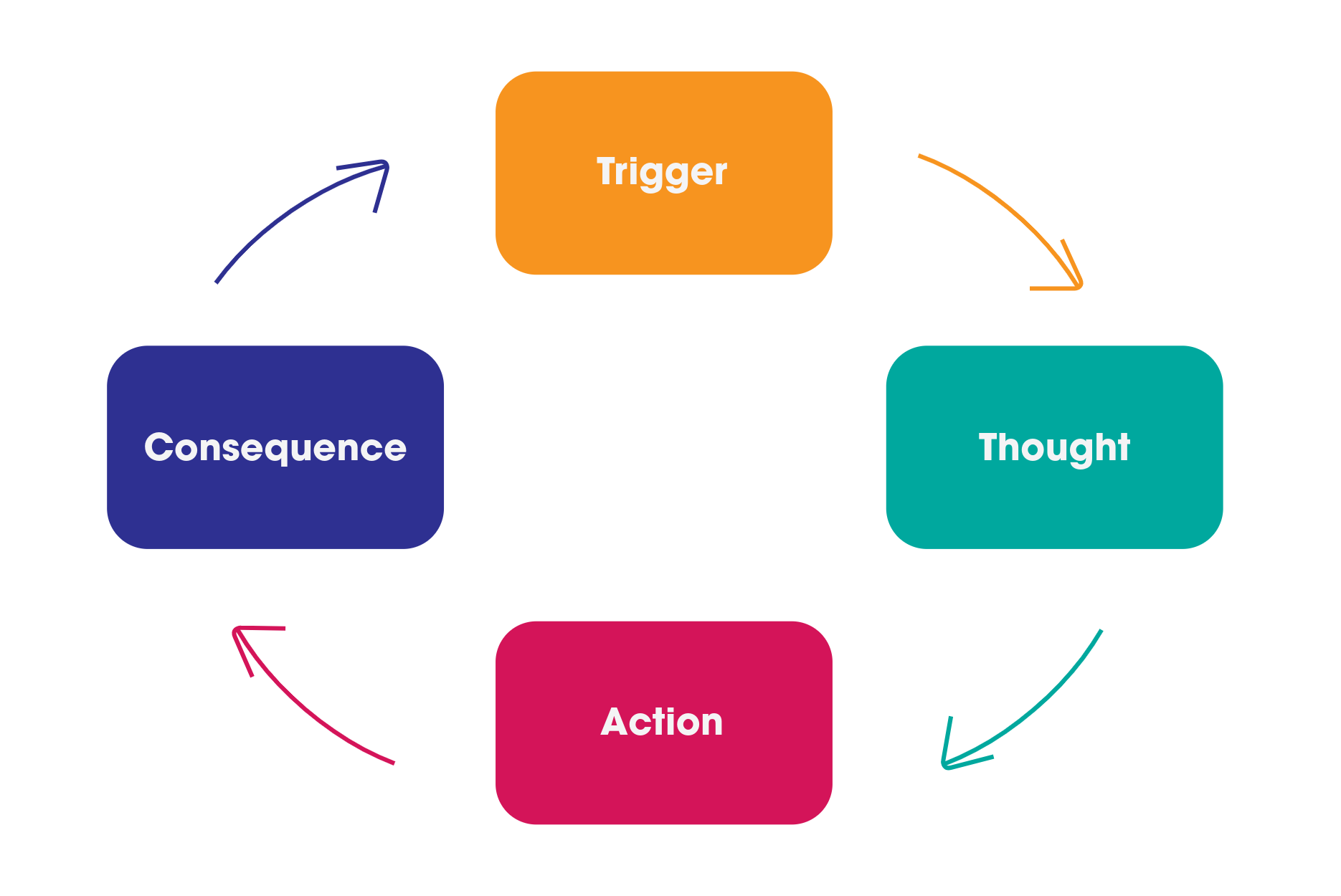
Much of the group’s work during the workshop centered on identifying what would make this possible — the necessary conditions for habits to truly take hold. We revisited the habit cycle: how a trigger leads to a thought, which leads to an action, which leads to a consequence. To embed TOC practices, triggers need to be built into the natural flow of work. Following the new way must be easy — and not following it, inconvenient. The consequences of doing the right things should be visible and rewarding, reinforced through feedback loops and metrics that make progress clear.
Without those anchors, even the best results will eventually drift. With them, the organization gains the stability and confidence to keep moving forward.[1]
2. Leadership Consistency
Sustainability starts at the top — but it doesn’t stop there.
Inconsistent leadership messages create confusion. The organization takes its cues from the top; if leaders revert to cost-world logic under pressure, so will everyone else. Sustaining change means that TOC is not just something leaders champion, it’s how they lead.
Leaders must do more than support TOC — they must model it. The way they set priorities, allocate resources, and navigate trade-offs either reinforces or erodes the system they’ve built. When leaders consistently apply TOC principles in their decisions and communicate the “why” behind them, people see TOC as more than a toolkit or the flavor of the month. They come to expect it because they see it as a management philosophy or way of doing business. That’s when the connection between TOC and the company’s success becomes visible, tangible, and trusted.
In the workshop discussions, participants surfaced the necessary conditions for that kind of leadership consistency to exist. It requires visible role modeling — leaders who demonstrate TOC thinking in action — and internalized ownership, where leaders see sustainment as their responsibility, not the consultant’s. It depends on demonstrated mastery and on continuity: processes for leadership selection, onboarding, and ongoing company-specific TOC education. These help to ensure that even when leaders change, the organization’s way of managing does not.
3. Ongoing, Visible Results
Nothing sustains belief like evidence that’s easy to see.
Visibility builds credibility. It signals that TOC isn’t a one-time event, it’s a continuous process of learning and improving. When TOC results are visible and current — in dashboards, reviews, and stories — they keep the system alive in people’s minds.
But visibility isn’t just about numbers. It’s also about cognition. When people can trace their daily work to visible improvements in flow, customer satisfaction, or profitability, then pride and ownership follow. And when results are not only achieved but shared — discussed, celebrated, learned from — the organization builds an immune system against regression. TOC evolves rather than erodes.
The group explored what must be true for results to stay visible and meaningful. Stories must be shared — often and widely — showing clear linkages between the use of TOC and the results achieved. Those results need to be tracked and communicated regularly, not just at the company level but also for teams and individuals. Continuous improvement must be built in, supported by mechanisms such as company TOC Centers of Excellence that sustain focus, learning, and adaptation.
Results, Not Just Resilience
These three factors — embedded habits, leadership consistency, and ongoing visible results — are the heartbeat of sustainment. They turn the extraordinary into the everyday.
And while we explored these ideas through a TOC lens, it became clear in the room that the pattern applies far more broadly. Whether the change is about TOC, Lean, Agile, or culture — the same forces determine whether progress sticks or slips away.
Sustaining any change means designing for it to last from the start: ensuring habits are anchored, leadership stays aligned, and results stay visible.
In my next newsletter, I’ll shift the lens from the organization to the implementer through what I call the Implementers’ Essentials, a collection of four design principles that help ensure every engagement can deliver both results now and stability later.
And because the learning shouldn’t stop here, I’ll soon be hosting monthly roundtables for a smaller, more focused group of people passionate about this subject — implementers and leaders who want to go deeper into what it takes to make change endure, with a focus on TOC implementations. Send me an email if you’d like to be part of that continuing conversation.
Lastly, I want to acknowledge that many of you helped in forming the thinking and questions that became this workshop. Through two Sustain The Change roundtables earlier this year, you shared your experiences, your frustrations, and your insights into what helps or hinders sustainment and I’m grateful for each of you in this community working to make TOC better and more lasting, both for this generation and the next.
Meaningful change isn’t measured by what launches — it’s measured by what lasts.
Reflection for You
Which of these three factors — embedded habits, leadership consistency, or visible results — most deserves your attention right now?
And what one step could you take this week to strengthen it?
- Lisa
1Kevin Kohls offers important insights into how to embed habits in his new book, Habit Engineering.
Whenever you're ready, here are a couple more ways I can help you:
- Assumption Hacking Essentials. If you’d like to strengthen the human side of your TOC practice, sign your team up for Jenrada’s course Assumption Hacking Essentials. It’s specifically designed to highlight how individual and group assumptions drive (or block) sustainable results, offering tools and strategies to ensure your improvements truly stick. You can learn more about the course here. →
- Jenrada Programs. Customized workshops and longer engagements to help you create an organization of aligned problem solvers delivering extraordinary results. Complete this form, send me an email, or schedule a discovery call.
Your Weekly AHA!
Every week, receive one actionable tip from JonahLisa to help you create breakthrough in your business and life.
We hate SPAM. We will never sell your information, for any reason.