
6-8 minute read
The room started spinning.
I had been visiting a client in North Dakota and, after a day of meetings, I arrived back in my hotel room and went to lie down. That's when it hit — no warning, and no idea what was happening.
For the rest of that week, the symptoms didn't really leave. Dizzy, a little brain foggy and a bit off balance during the day. And then, every morning getting out of bed, every night getting into it, and any time I may have gotten up in the middle of the night — the room would spin around me again.
I thought perhaps it was a medication I'd been prescribed for just that week and, since that was the simplest explanation and I had work to do, I went with it. But the week went by and my medication ran its course and still, the symptoms didn’t go away.
It was all fairly frightening. Nonetheless, I managed to ignore it. I fulfilled another client commitment the following week and set my sights to the final preparations for our annual trip to Burning Man.
From the outside looking in, you might be like “what the heck, Lisa, why would you ignore that?!” And fair enough, I suppose. But people do this kind of thing so often that there’s a term for this cognitive bias called the Ostrich Effect.

You see, information isn’t neutral. Not only might I get bad news about my health, but there was the fact that going to the doctor and dealing with this could really screw with my plans for the next month!
So instead of calling my doctor, and making - and keeping - an appointment, and doing whatever else it would take to resolve this, I stuck my head in the sand like an ostrich and stayed the course with what I had already planned.
Dizziness in the Desert
Now for those of you who don’t know, Burning Man isn’t just a passive thing for my husband Danny and me. We’ve been going since 2011. I volunteer year-round and lead one of the theme camps. A tremendous amount of effort goes into getting prepared (most of which Danny takes on) and, on top of all that, our best friends were coming out with us this year and we all were really looking forward to it. If you’re not getting the gist yet, there was a huge cost (both sunk and real) to my plans changing.
And so on August 25th, the reality of my situation be damned, we set out to the Nevada desert.
Unsurprisingly, my symptoms didn't get better once we arrived. If anything, they got worse. My heart rate was running in the mid-to-upper nineties, and it wasn't dropping much even at rest. The altitude had me breathing harder than it should have. And underneath all of it was a question I couldn't answer: what is actually wrong with me? It was obviously not the meds that I had taken earlier in the month! I didn't know if I was looking at something minor or if I was on the edge of something much worse, like a heart attack.
Danny, meanwhile, had his own issues, dealing with severe pain in one of his elbows, even while powering through it to get everything ready for the trip. So there we were — him in pain, me quietly panicking, and the weather doing us no favors.
By Sunday, our camp was built and we should have been ready for a great burn. But I wasn't any feeling better, and I was barely able to sleep because of that. At some point I realized that if I didn't make the decision to step back, I was at risk of the decision being made for me. I'd already been flown out of Burning Man once before (this is a whole story you can read here), I wasn't willing to put myself through that again, and I definitely wasn't willing to put Danny through being the one left to handle it again either.
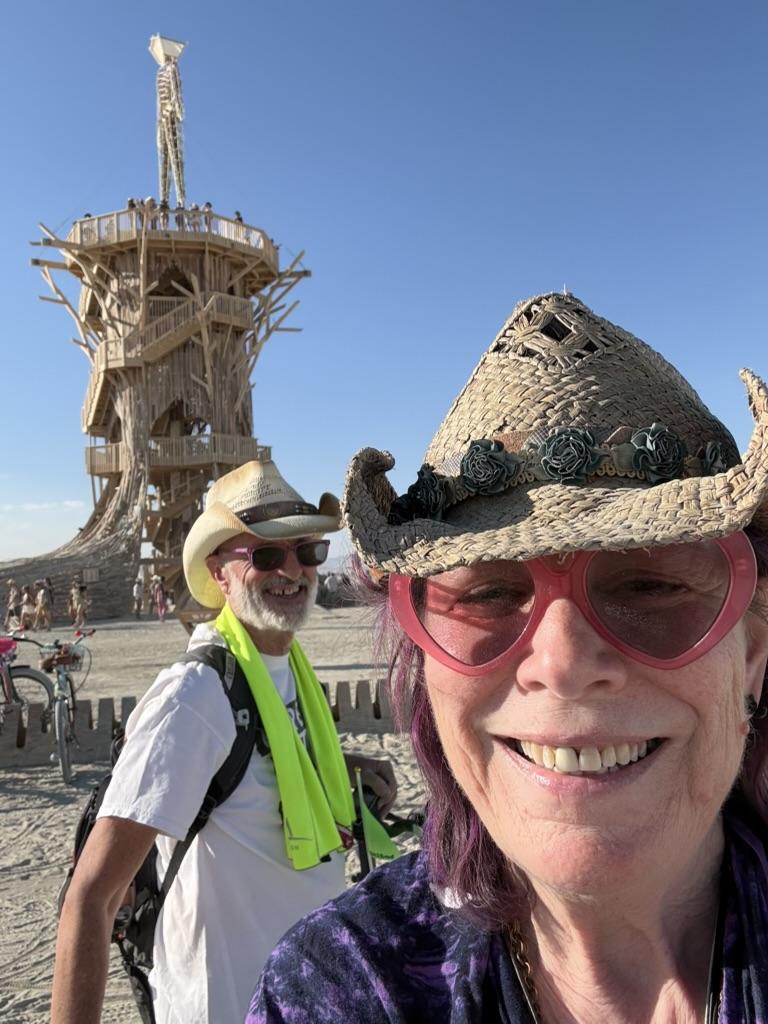
We did manage to get out onto the playa and visit the man.
“The courage to face inconsistencies”
So Monday night, Danny and I together decided that we'd pack up on Tuesday and leave on Wednesday. I felt calmer almost immediately after we made that decision. We spent Tuesday re-packing all of our things and left Wednesday, mid-Burn. We arrived home Thursday evening and saw the doctor Friday morning — both of us.
She diagnosed me in minutes, with a simple test: classical vertigo (BPPV), as she put it. A physical therapist gave me the Epley maneuver (a series of movements that treat vertigo) that afternoon, and the spinning was gone almost immediately. But because I'd sat with the symptoms for nearly a month before doing anything about it, I'm still dealing with some lingering dizziness and brain fog. I've been prescribed some balance and eye movement exercises, and it should be a week or so before I'm back at 100%. Had I seen the doctor and been treated shortly after the first attack, I probably wouldn't be dealing with any of this residual stuff at all.
Here's the part I keep coming back to.
I have a favorite line from Eli Goldratt, from his introduction to The Goal. He wrote:
| The secret of being a good scientist, I believe, lies not in our brain power. We have enough. We simply need to look at reality and think logically and precisely about what we see. The key ingredient is to have the courage to face inconsistencies between what we see and deduce and the way things are done. |
I've built a career on that idea. I ask clients to do it constantly — look at what's really happening, not what you've told yourself is happening, and have the courage to sit with the gap between the two. And there I was, with a whole set of data my own body was handing me for free (lying in bed with the room spinning, spending days with dizziness and brain fog), and I decided the data was really really inconvenient. So I looked away from it (or stuck my head in the sand, if you like the ostrich metaphor).
Lessons From the School of Hope Management
A client once told me that before we started working together, their company ran on what they came to call "hope management". Hoping the numbers would turn around on their own. Hoping the problem would resolve itself before anyone had to make a hard call. Hoping the snap decision they had just made would do the trick. That phrase has stuck with me for years, and this past month I became a very personal demonstration of it. I was hoping the dizziness would just go away. Hoping I'd feel better once we got there. Hoping it wasn't anything serious. Hope, instead of a decision based on what was actually happening.
Hope management doesn't sit still while you wait it out — it compounds. The worry itself became part of the problem. All that not-knowing, all that "am I about to have a heart attack," was literally driving my heart rate faster and my breath shallower, on top of whatever the vertigo alone was doing.
This is where I'd push Eli's quote a step further than he may have meant it or the way most folks think about it. Facing reality isn't only a brainpower problem. My brain wasn't the part of me that was giving me an honest signal that week and the weeks leading up to it — my body and my emotions were. My brain was the one busy rationalizing. But the spinning room, the racing heart, the shallow breath, the mounting fear: that was reality, delivered without a single word. So the courage he's talking about isn't just the courage to think clearly. It's also the courage to actually listen — to what your body is sensing, and to what your heart is feeling — and let that inform your thinking rather than getting blocked by it.
I had every piece of information I needed to make a better decision, earlier than I made it. I didn't act on it because I chose not to listen to what my body and my emotions were handing me. I had that ability available to me the whole time, and I refused to use it. Instead it was the thinking part of me, the rationalizing half, that overrode what were otherwise some pretty strong signals! And that's how I ended up in the middle of a Nevada desert with a problem I could have solved three weeks back with a phone call and an afternoon appointment.
| So here's the question I'd leave you with, for your business as much as for anything else: where, right now, are you managing something with hope instead of looking straight at it? What is the room-spinning version of the truth that you already have, that you're calling something else because the real name is inconvenient? |
You don't need more brainpower to see it. You already have enough. You just need the courage to listen.
Till next time,
Lisa
PS: While I'm on the subject of Burning Man, I want to say an extra thank you to everyone who participated in Jenn's Challenge. Danny and I didn't make it to the temple, but our best friends did, and placed my art project there. That project contained descriptions of each of the acts of kindness that people shared for this year's challenge. 60,000+ people had a chance to walk by it and become touched and inspired.
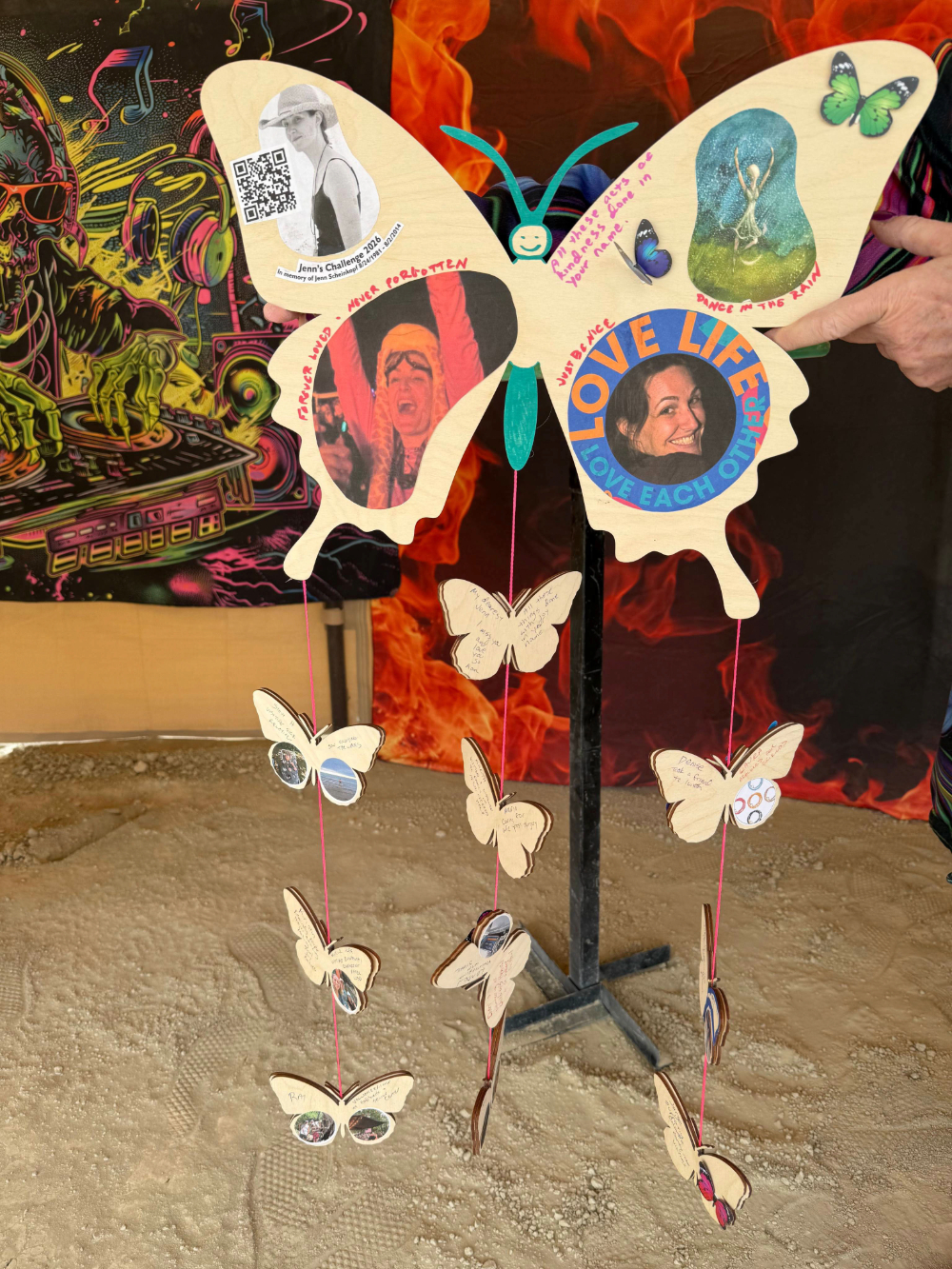
Holding up the project at camp.
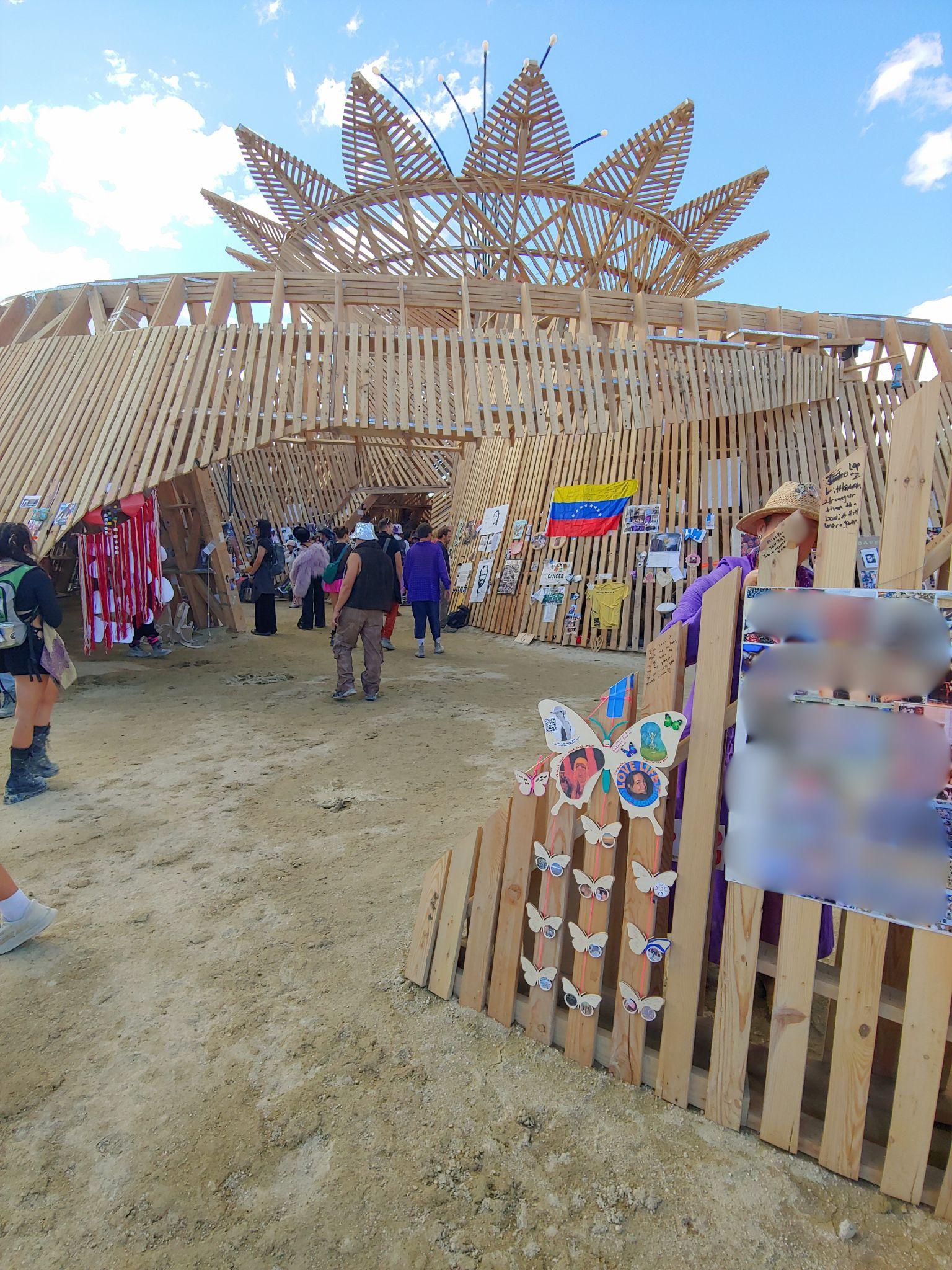
My project hanging at The Temple. Placed & photographed by David & Andrea Cohen.

The Temple when it opened. Photo by Rand Larson

The Temple at night. Photo by Rand Larson
Whenever you're ready, here are a couple more ways I can help you:
- Assumption Hacking Essentials. If you’d like to strengthen the human side of your TOC practice, sign your team up for Jenrada’s course Assumption Hacking Essentials. It’s specifically designed to highlight how individual and group assumptions drive (or block) sustainable results, offering tools and strategies to ensure your improvements truly stick. You can learn more about the course here. →
- Jenrada Programs. Customized workshops and longer engagements to help you create an organization of aligned problem solvers delivering extraordinary results. Complete this form, send me an email, or schedule a discovery call.
Responses